

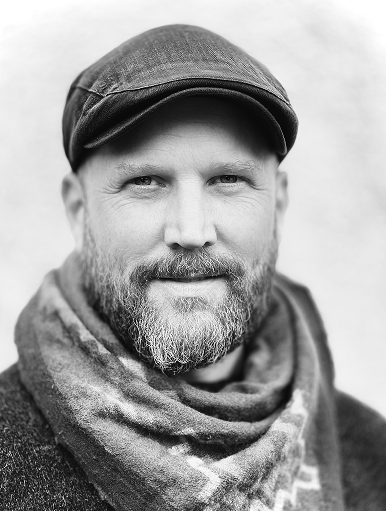
THE THIN KING & FELT REALITY WITH JEREMY WHELEHAN
The Camera as his Magic Carpet
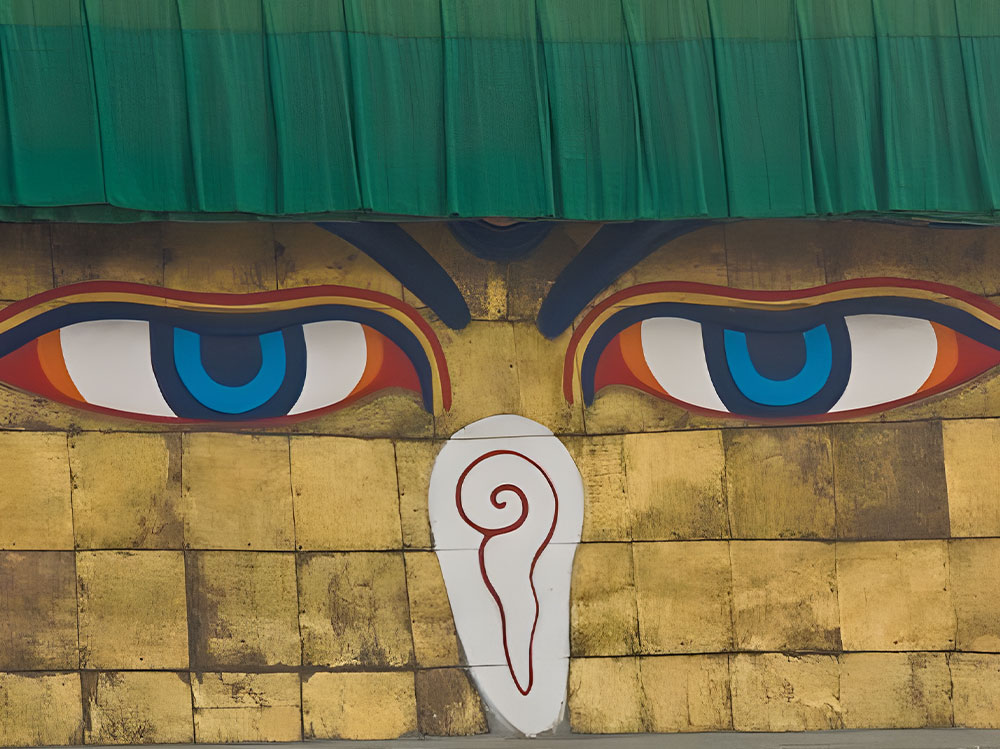
The shape of Jeremy's life is a series of concentric spirals: film school in Ireland, the camera department on 35mm feature productions, a move to London, independent producing, founding member of London's Old Vic Theatre Company, directing Shakespeare, documentary-making. Idiosyncratic from the outside and entirely consistent from the inside. The thread is storytelling. Storytelling as craft as access to the invisible, to the archetypal, to the inner world that myth and mystery have always mapped.In his late twenties, he went to Nepal. The people he met there had almost nothing by Western standards and were, in his direct experience, happy, generous, and present. He came back to Europe, where people had everything and were miserable. We’ve lost something along the way. The thought lodged in him. What had been lost? And who on earth still had it?
“I arrived at two in the morning with my camera and my backpack. I found the pyramid that had been calling me all my life. I climbed to the top. And I just listened. The jungle. The stars. The acoustic, the temperature, the invisible energetics of the place. Everything was so alive.”
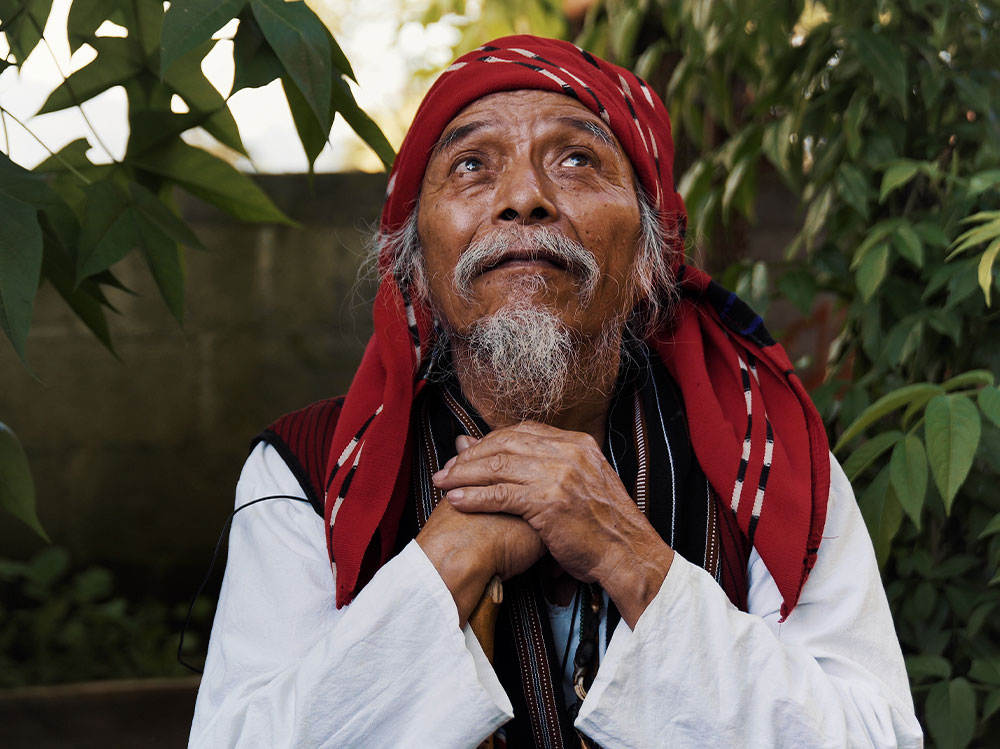
The camera became his magic carpet. During holidays from filmmaking work, he would fly alone to Mexico, Guatemala, Egypt, wherever the pull was, and spend weeks inside ancient sites, meeting elders, living in community, and learning. He didn’t know, for the first decade of this, that it would ever be anything other than his private education. He was just a seeker. He happened to have a camera. The professional turn came in 2014 and 2015, when a documentary he’d made about a Shakespeare production starring Kevin Spacey and directed by Sam Mendes reached Netflix, won the Best Documentary at the London National Film Awards, and delivered him everything he’d imagined since childhood: the cinema screening, the red carpet, the award. He walked through the ceremony feeling the hollowness of it in real time, the glamour revealing itself as flimsy, the universe he says was ‘shouting in his ear.’ He returned to his table, set down the award, and the trophy broke in half on the table. He still has it in two pieces. He keeps it as a reminder.
The Knowing of the Heart
Jeremy has a term for the kind of knowing that the modern West has elevated above all others. He calls it the thin king. He pictures a skinny figure with a crown, no body, just a pulsing brain attached to a spinal cord and a cascade of nerves, frantic with the effort of figuring everything out. The image is funny and exact. It is the intelligence that can solve equations but cannot feel the temperature of a room. The intelligence that optimises but cannot grieve.
What it has been optimising away from, in his view, is “felt reality.” The kind of knowing that exists not in the mind but in the body, in the heart, in the direct encounter with life that cannot be rationalised into structure. The concrete, ordinary and available experience of being present to something without the mediation of thought. What the Greeks understood as catharsis: the moment when the buffering between the self and experience falls away entirely, when you’re just there, tears and snot and laughter, unbuffered.
“To heal oneself is to heal seven generations ahead and seven generations behind. Wisdom Keepers is all an effort for me to learn and understand and heal myself. And try, naively, to share it with others. But that’s my journey.”
He traces his understanding of this back to his early study of film. He was trying to understand why storytelling worked, why Hannibal Lecter was compelling despite being monstrous, why you could sit in a cinema and feel someone else’s experience from the inside. The answer he arrived at was that the story is an empathy communicator; a technology for giving people a felt sense of a life they haven’t lived. The Greeks, he notes, did not invent theatre as entertainment. They invented it as a healing modality. Oedipus was a way of taking the psyche’s most twisted architectures and placing them on a stage so the audience could encounter them at a survivable distance.
The through-line between his filmmaking and Wisdom Keepers is the relationship between theatre and ritual: the centre of the circle where people collectively enter the invisible felt reality together. It happens in theatres and in temples. Wisdom Keepers is transmission, the kind that reaches people before it is processed by the thin king. The kind that, like theatre at its most alive, has the capacity to transform.
The vehicle to reach the collective has been social media. In the torrent of doom-scrolling, between the carnage and the fluffy cats and the advertisements, an elder whispering a small truth. Jeremy has found, over many years of watching people encounter his elders online, that what lands is the recognition. The felt thing.
A Key Is Not a Souvenir
There is a camera at the centre of everything Jeremy does, and the camera is a problem as much as it is a tool. He has spent years learning what he calls the dance: how to be present in a sacred or ceremonial space with a camera without collapsing the space. How to film a medicine circle, a prayer, without the act of filming becoming an intrusion that changes what it documents.
The answer he found came from a documentary about an American war photographer in Lebanon in the 1980s. The photographer was standing a foot away from a woman burying her husband and three children in four graves. He was crying. He was also shooting. No one in the frame registered his presence. The interviewer asked how. The photographer described it as an energetic exchange, a quality of presence: fully honouring the other person, fully honouring the moment, not trying to take or give or get, just being there. A curious, energetic equilibrium. A consent that required no words.
Jeremy is also alert to the extractivism that can masquerade as reverence. The fetishisation of the elderly. The tendency to bring a grandmother in to wave feathers and say something profound and then send her back. The spiritual tourism that takes a sweat lodge as a destination rather than a key. The way the West can consume indigenous knowledge without the relationship that makes the knowledge meaningful, without the reciprocity that makes the encounter ethical. He distinguishes between appropriation and being shown a key. One that, when received with integrity, can be taken home and used to unlock what is already present in the seeker’s own tradition, their own land, their own ancestry.
The World's Memory, Before It Forgets Itself
A few years ago, he came home to Sligo. And found that the most densely monument-covered land in Europe had been under his feet all along. Six-thousand-year-old cairns aligned with solstice sunsets. A tomb five minutes from his house where the equinox sunrise floods the chamber with light. Standing stones, stone circles, a landscape so saturated with encoded intention that he drives the ordinary roads now seeing fairy forts in the hillsides, reading what the land has been trying to say for millennia.
“It speaks to my naivety that it took me twenty years going everywhere else before coming home and seeing it all on my doorstep. But I think I had to do that first. I have a deeper appreciation now. I can feel it.”
He hosts a monthly music night at his house. Musicians come from across the country. Fiddles, whistles, flutes, bodhrans, poetry, song. He is learning to deepen his Irish, spending time with the language and the people who still carry it. He describes what is happening in Ireland right now as a renaissance. A pulse coming back through the old Gaelic, Celtic, and Druidic traditions, an electricity in the culture that is particularly alive in young people. He calls it a fountain. The land itself seems to be pushing something back up through the surface.
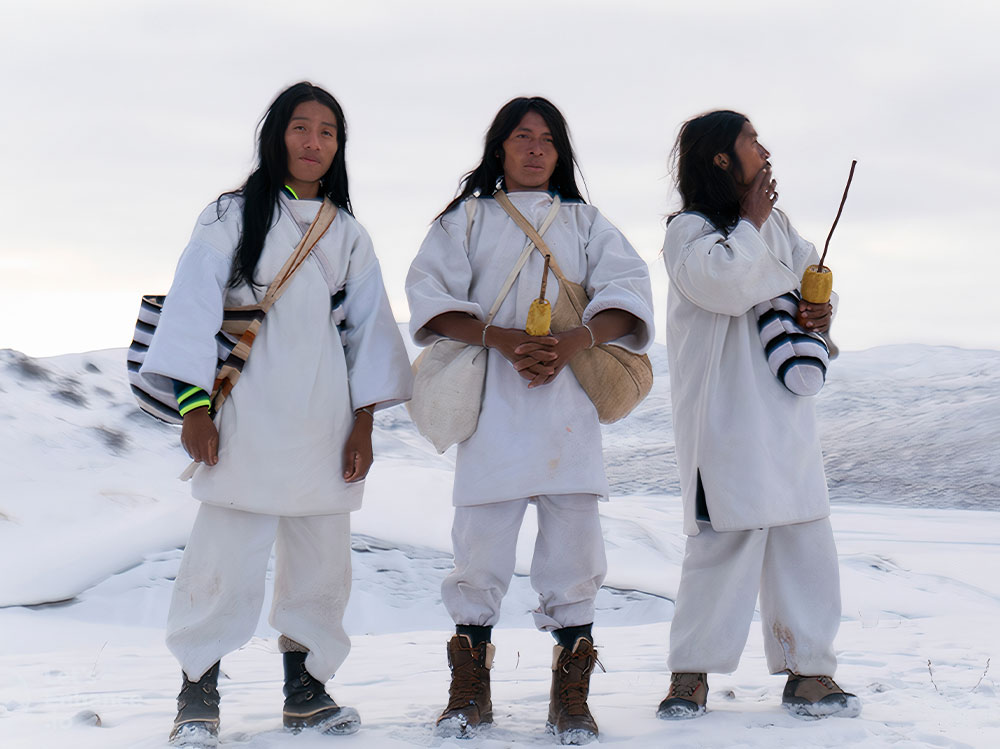
The project is at a threshold. For years, Wisdom Keepers has existed almost entirely as short-form clips; the elder in a minute or two, the fragment of transmission, the thing that can stop someone mid-scroll. Now Jeremy is editing the longer-form films. Lake Atitlán and the Mayan community in Guatemala, the Kogi in Colombia. The full context, the texture, the story wrapped around the transmission. A podcast is coming. And beyond all of it, a vision he describes as a seed bank, an archive of the living ancestral traditions of the world, a place where filmmakers working across cultures and decades can bring what they’ve gathered under one roof, and where anyone can come to find what remains.
He still has the award in two pieces on a shelf. He keeps it to remember what the moment of its breaking told him: that the work that matters is not the work that gets applauded in rooms full of people who already agree with each other. It is the work that carries something living from one place to another, the precious nature of culture and wisdom often lost along the way.
The elders are still speaking. Wisdom Keepers is where you can hear them; films, interviews, podcasts, and live conversations with ancestral knowledge keepers from around the world. Funded by those who found it and stayed. If it moves you, become one of them. patreon.com/wisdom_keepers