


ZAYA AND THE EYES OF WHO CAME BEFORE
THE SKIN REMEMBERS
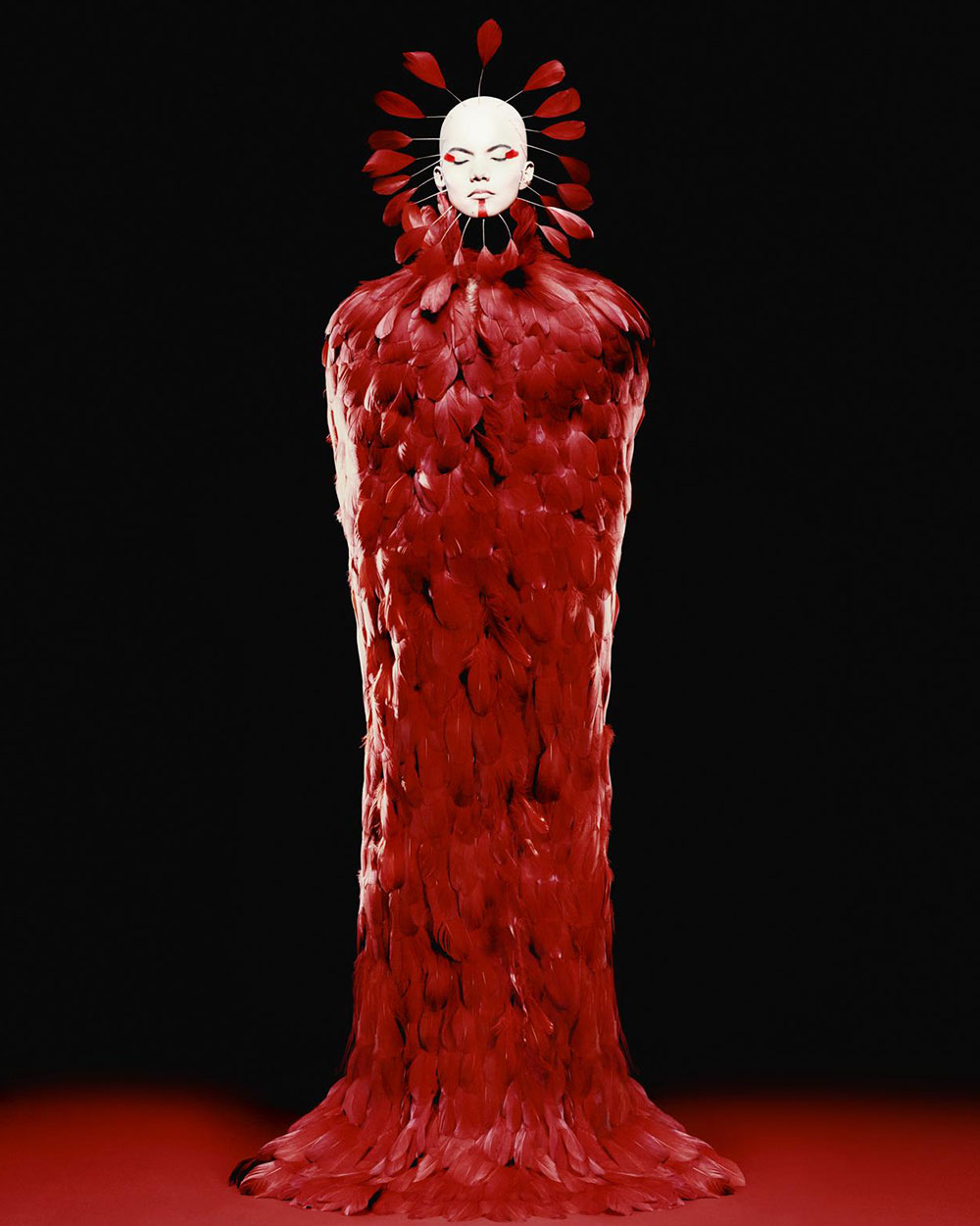
There is a mark Zaya traces across her face when she needs to feel grounded. It comes from jenipapo, a fruit whose ink enters the skin and stays for twenty days, indistinguishable from a tattoo until it fades, then quietly disappears. The graphism, as she calls it, is cosmology made visible. A writing system for states that do not have names in any colonial language. In the Guarani-Mbya tradition, the body is painted according to mood, to passage, to ceremony. When someone is lost to grief, the paint carries what words cannot. When a woman is pregnant, the body is marked to honour what is growing inside it. When a baby is three to five months old, it is painted for the first time, already entered into the language of the community before it can speak any other. The elder who paints for the first time transcends, she says. In his own body. You see that he is alive.
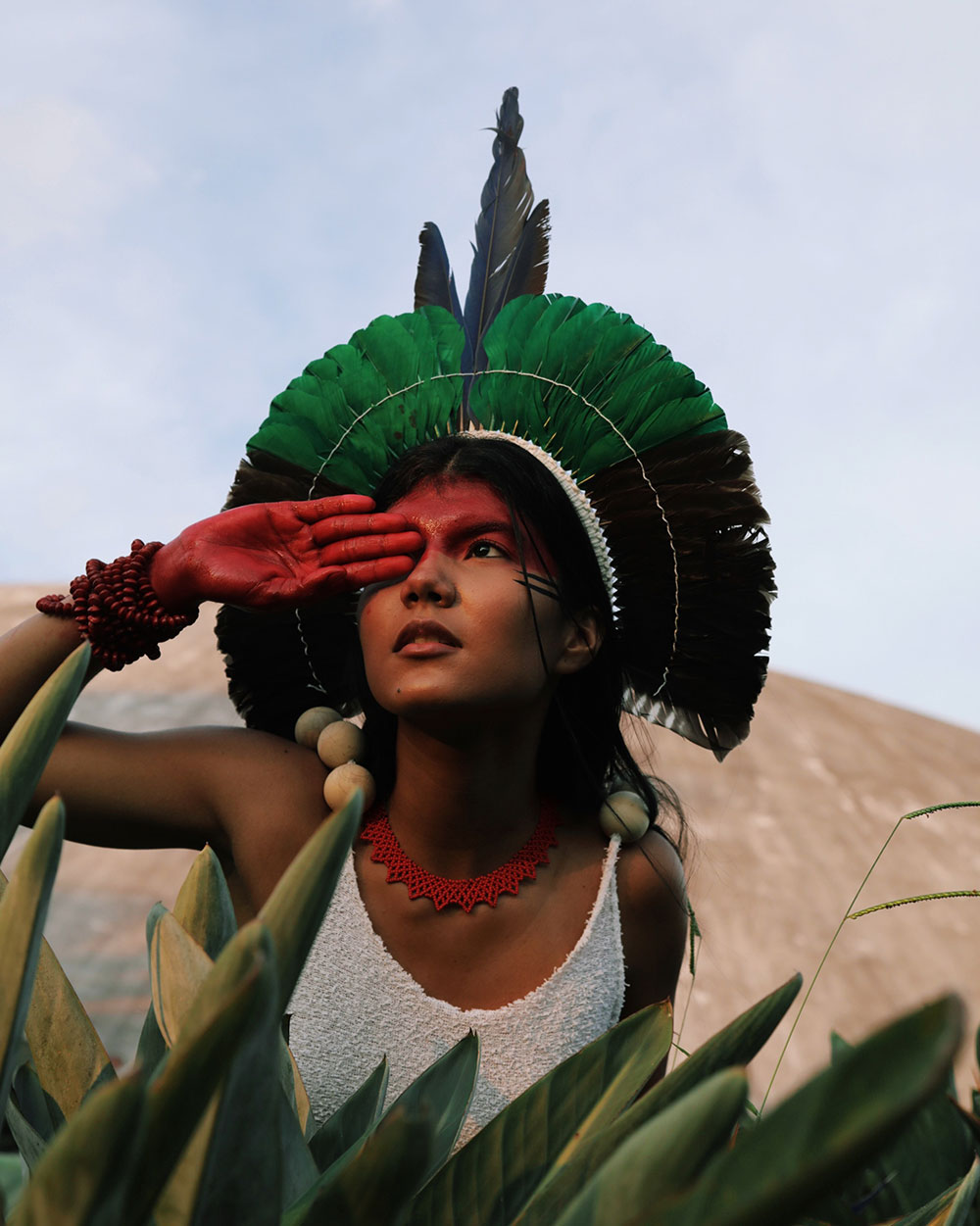
“When I make the paintings, I come back to my spirit in a different way. I feel like the most beautiful thing in the universe. The ancient knowledge of your hands gives that power back to you.”
What the women, the mothers, the aunts, the elders, around her taught was a lesson in grounding in existence itself. Society, she says, puts you in a place of very strong insecurity towards your existence. What those women gave her was the opposite: confidence on her feet, deep and early before the world had a chance to erode it. Follow your intuition. It will never be wrong. It will only protect and guide you. That is the beauty the fashion industry has no word for. Ontological security. The knowledge that you are here, and that being here is already enough.
THE RUSSIAN DOLL
Zaya is 25. She has gone to fittings where, after trying ten garments, a stylist looked at her and said: darling, nothing is good on you. She has had agents tell her, with apparent care, that she should straighten her hair and should not paint herself that week. The corrections came softly. Little by little, she says, very subtle. Sometimes even in silence. She understood everything.
She speaks of a full moon, and a ritual she holds each month. She had arrived at an event with her body painted; her arms marked with jenipapo that would not wash out for twenty days because the ritual had to be honoured, and so did the invitations. She entered the rooms. She heard the noise. The judgment. The misunderstanding. She understood, after that night, that she might not get certain jobs. Jobs she needed.
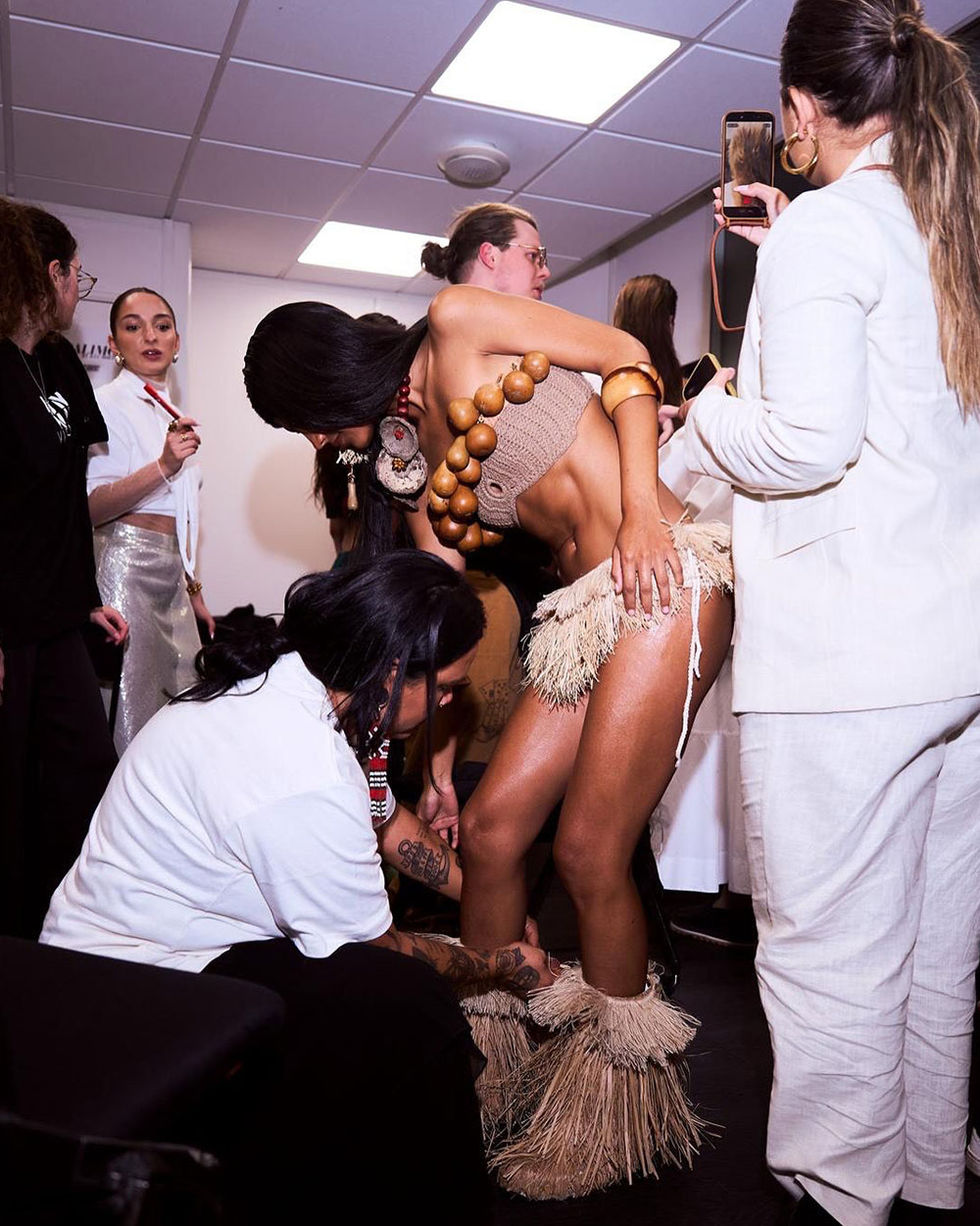
What she refuses to do is locate the wound in herself. The system was built to reach certain people, those positioned to consume at the level the industry requires. Her body, her face, her marks: they did not fail the aesthetic test. They were simply legible to a different world. The beauty that she carries is not invisible but it is unaddressed. There is a distinction, and she holds it. She speaks of what it costs to wear a coat over yourself for long enough that you forget, for a moment, what you feel like underneath it. She had to dress and behave in a certain way. In different rooms, with powerful people. It was not that she had to go far from her identity, she says. But she had to wear a mask. What saved her was not resilience, nor a strategy. It was the Russian doll, the matryoshka, which she returns to as an image. Her identity is not the smallest one inside the box. It is the essence that runs through all of them. The outermost, the innermost. All versions are true.
THE VOICE OF A DREAMER
Zaya is not interested in using the industry as a mirror. She entered it to make visible something that had always existed but had never been acknowledged by the systems with the furthest reach. She entered because when she started working, there was no indigenous model she could recognise herself in, and so she went in to exist, and create something that she wished existed. The gate, she says, is now open. Whether she walks through it every day is no longer the point. She has a new manager who spoke to her in a way she had not heard before: we are not going to build a narrative. It is not a strategy. It is the devotion that is inside of you. She describes no longer reading what she was going to say. Just sitting with what was already there. Her English is broken, she says. It doesn't matter. What she has to say comes through anyway.
“If you hold a butterfly in your hands, she is so small, so delicate, and you love yourself and your own body as the butterfly you hold. Imagine that the land is the butterfly. She doesn't need us. We need her.”
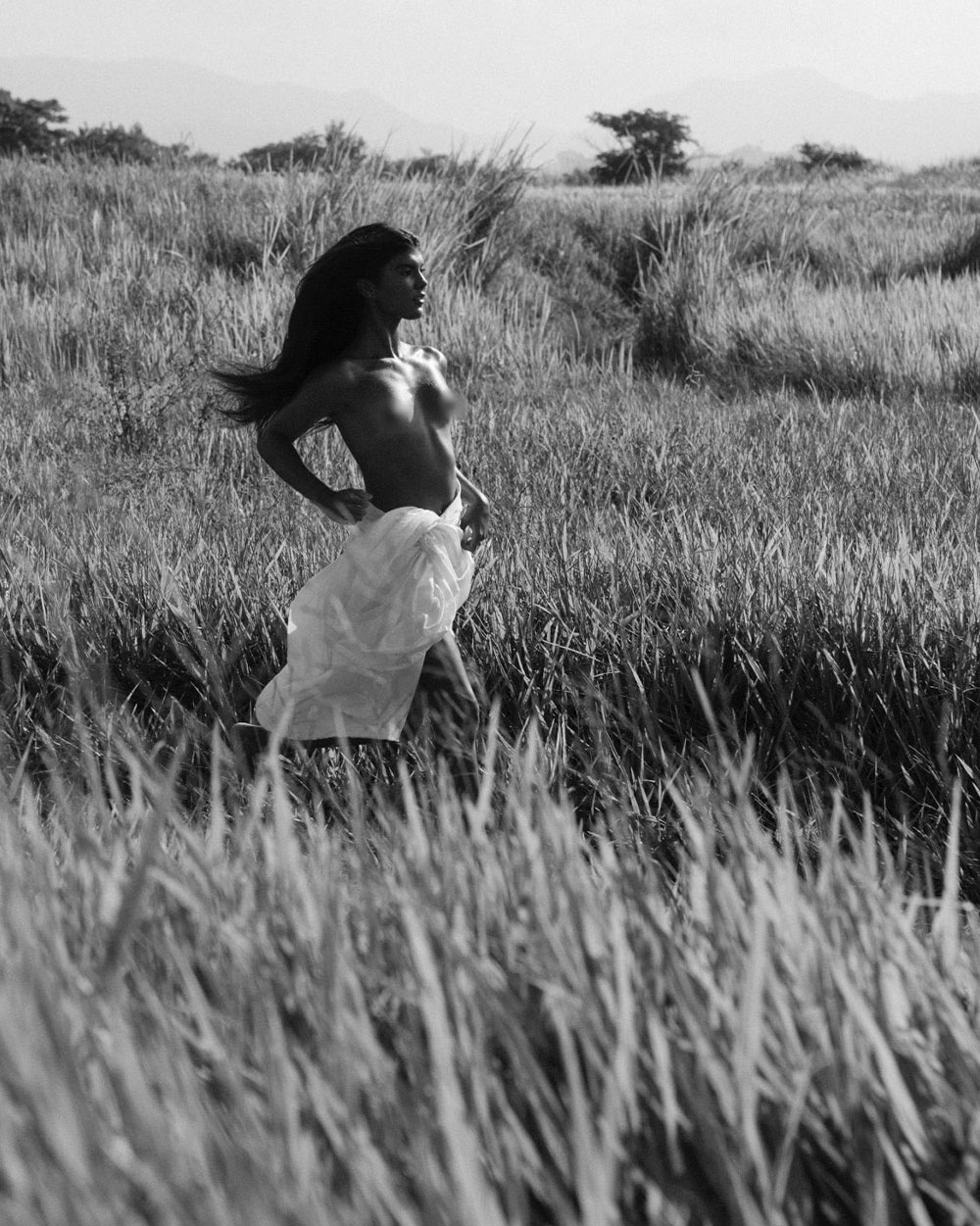
There is a vision she keeps returning to. The earth as a butterfly, small in our cupped hands, sick in parts of herself now; her lungs closing, her water laced with what we put into it. She asks: have we ever thought about whether our lung is her lung? Reconnect to the earth, and you find the love that was always available towards everything you see in front of you. She does not want just awareness. Awareness, she says, is possible without change. What she wants is the inner self-awakening that makes action feel natural rather than obligatory; the moment when someone stops mystifying figures and turns the same regard on themselves. Have you done this with yourself every morning? That is her mission. Not to be the figure they glorify. To be the voice that reflects back a voice already inside them.
“God gave me beauty, she says, and I believe in it. But I believe in something bigger than the stars. The voice inside every human. It is all of us, sharing the world with each other. The dream is planted in your mind for a reason. We have to believe in this reason. It will be the rhythm of your journey.”